
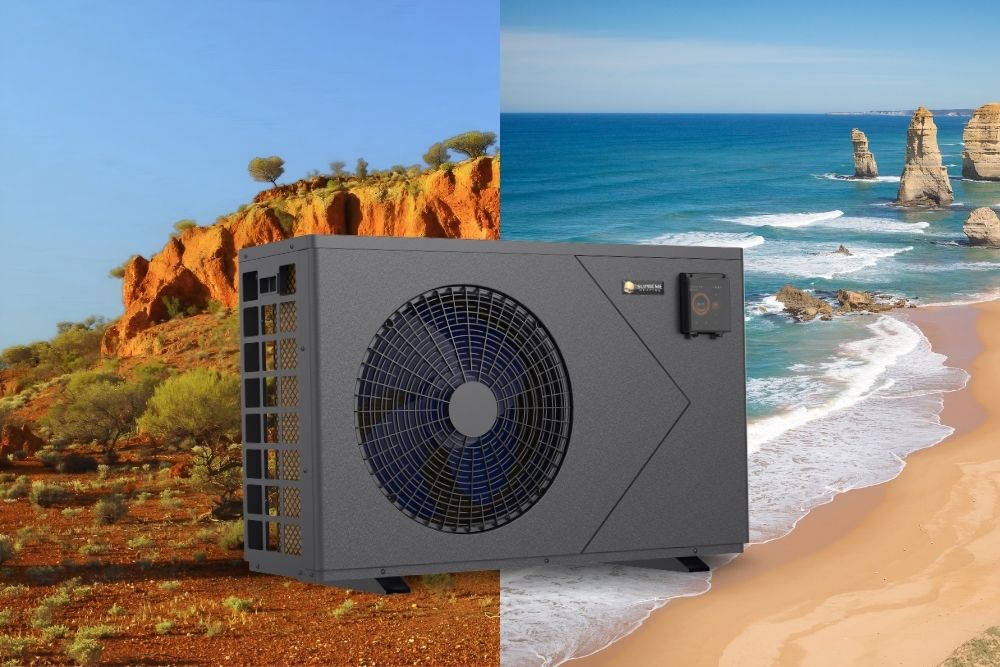
How Long Does a Pool Heat Pump Last in Australian Conditions?
Quick Answer
In Australian conditions, a pool heat pump typically lasts:
• 5 to 8 years for entry-level systems
• 8 to 12 years for standard inverter systems
• 12 to 15+ years for premium full inverter systems designed for coastal durability
Lifespan depends on compressor quality, corrosion resistance, inverter technology, installation standards and environmental exposure.
Understanding Pool Heat Pump Lifespan in Australia
When homeowners search for how long a pool heat pump lasts in Australia, the real answer depends on engineering quality and climate conditions. Australia presents unique challenges including coastal salt exposure, high UV intensity and significant seasonal temperature swings.
Why Australian Conditions Matter
According to the Bureau of Meteorology, many Australian regions experience summer temperatures above 35°C and winter lows below 5°C. These repeated temperature cycles increase compressor stress and long-term mechanical wear.
Research from CSIRO confirms that marine environments accelerate corrosion of unprotected metals. With over 85% of Australians living within 50 kilometres of the coast, corrosion resistance is a critical factor in pool heat pump durability.
What Reduces Pool Heat Pump Lifespan
- Low-grade compressors with frequent on-off cycling
- Inferior heat exchanger materials
- Poor airflow design
- Lack of voltage and surge protection
- Direct exposure to coastal salt spray
- Excessive runtime due to uncovered pools
Engineering That Extends System Life
Premium inverter systems that utilise twin rotary compressor technology, titanium heat exchangers and corrosion-resistant construction are better suited to Australian environments. Systems such as the VProPlus inverter heat pump and Nova V2 inverter system are designed with airflow optimisation and enhanced internal protection architecture to support long-term durability.
Does Inverter Technology Make a Pool Heat Pump Last Longer?
Yes. Full inverter pool heat pumps adjust output gradually rather than switching fully on and off. This reduces compressor strain, lowers mechanical stress and improves overall reliability over time.
Refrigerant and Environmental Efficiency
Newer generation systems increasingly use R32 refrigerant, which the Department of Climate Change, Energy, the Environment and Water identifies as having significantly lower global warming potential compared to R410A. Improved efficiency reduces long-term component strain.
How to Maximise Heat Pump Lifespan
- Maintain proper airflow clearance
- Install surge protection
- Clean condenser coils annually
- Use a high-quality pool cover to reduce evaporation
Evaporation can account for up to 70% of total pool heat loss. Reducing evaporation lowers runtime hours and mechanical wear.
Lifespan Comparison Overview
- Entry-level systems: 5 to 8 years
- Standard inverter systems: 8 to 12 years
- Premium inverter systems engineered for Australian conditions: 12 to 15+ years
Frequently Asked Questions
1. What reduces the lifespan of a pool heat pump?
Salt air, voltage fluctuations, poor airflow, frequent cycling and excessive runtime reduce overall lifespan.
2. Is a coastal installation bad for pool heat pumps?
Not if the system includes corrosion-resistant materials and protective coatings designed for marine environments.
3. Can a pool heat pump last 15 years?
Yes. Premium inverter systems built for Australian climates can exceed 15 years when properly installed and maintained.
Data Sources
- Bureau of Meteorology – Australian climate data
- CSIRO – Marine corrosion research
- Department of Climate Change, Energy, the Environment and Water – Refrigerant impact data